 Tuesday, October 20, 2026
A friend of ours – a truly wonderful woman – was playing with her four-year old granddaughter in her family room when the little girl sat on one of the wings of the coffee table which fell over onto her grandmother’s foot injuring its big toe. “Ouch!” The score in this particular tussle was small, adorable human 1, Nana 0. The table was undamaged.
A couple of days later, after a visit to a large orthopedic practice in our community, x-rays determined that the big toe was, in fact, broken, straight across where the edge of the coffee table hit it. No cast or splint was necessary. The only prescription was to have our friend keep her foot in a “boot.” Who among us hasn’t seen one of these boots here and there or had to wear one? A stiff, clunky boot with nylon Velcro straps, hard plastic sides and a stiff-rubber sole that would prevent her from wiggling her big toe in the course of ordinary activities. So, no running. No driving. No sex? (“Yikes!”) …Six weeks later, a lighter, simpler shoe would be sufficient. Six weeks after that her big toe bone should be heeled. We’ll see about that.
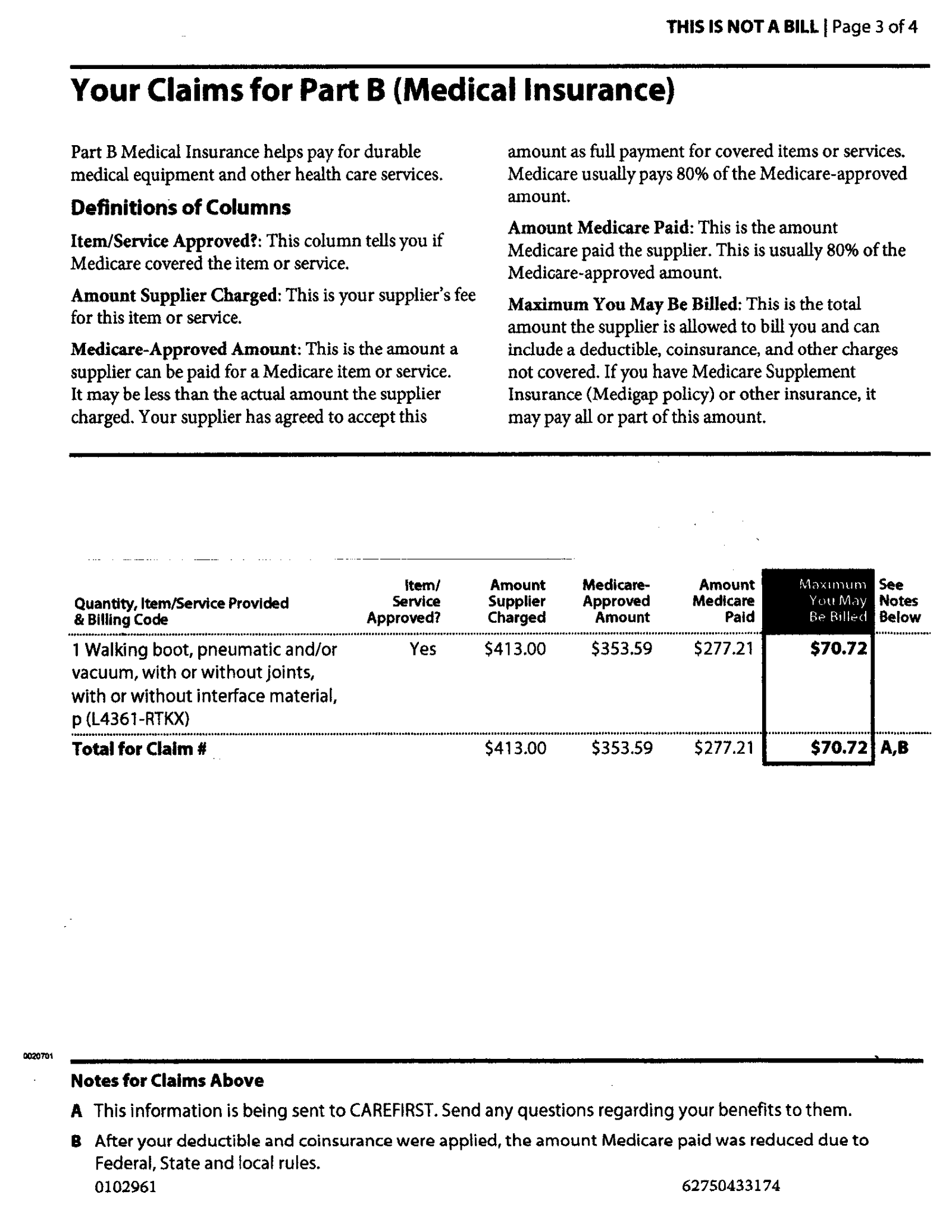
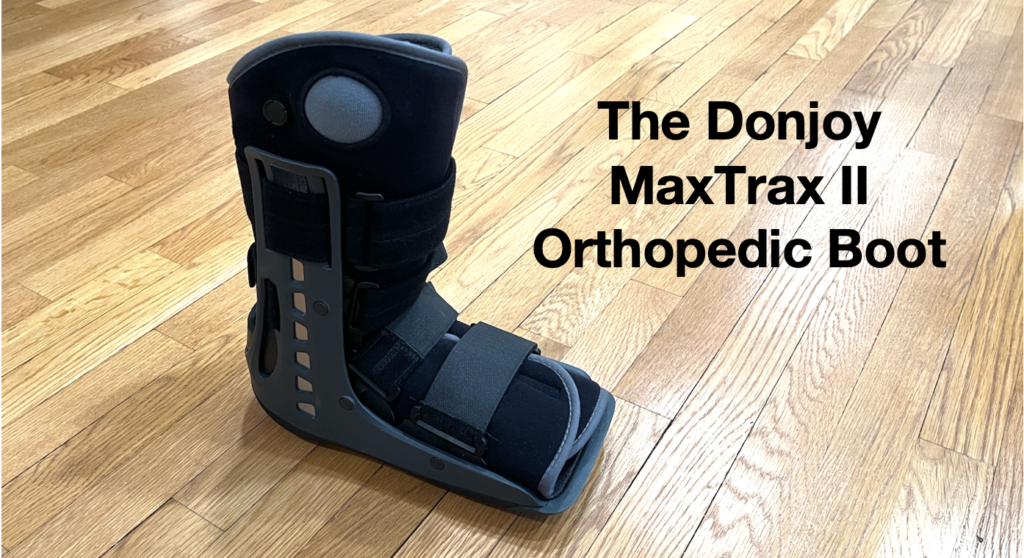
The big boot in question – See the featured image above. – was a Donjoy brand MaxTrax II (medium size) for which the orthopedic practice wanted to charge our friend $413.00. Medicare approved $353.59 for the boot, paid the practice $277.21, which is approximately 80% of the $353.59, leaving a balance of $70.72 to be paid by the patient or supplementary insurance, if any.
“So, what?”
The “So, what?” is that this same boot is available from various online retailers such as the one shown below for only $68.95 plus shipping, plus sales tax if any – way less than the $413.00 the orthopedic practice wanted to charge and much less than the $353.59 approved by Medicare.
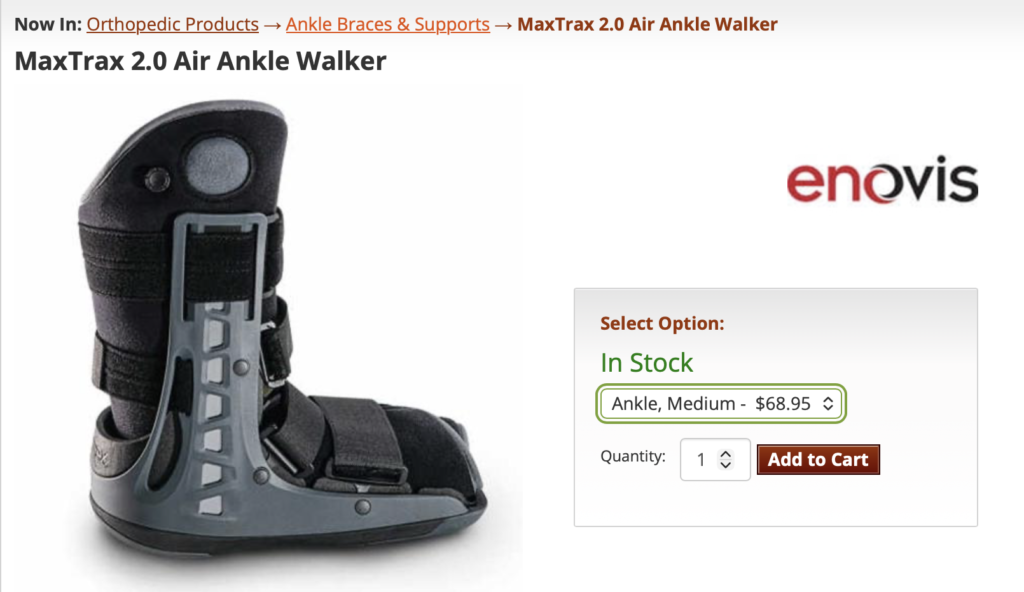
$68.95 is less than 20% of what the orthopedics practice was paid for the boot our friend bought from the practice through her insurance. Through Medicare, plus supplementary insurance she has with CareFirst. If this difference is indicative of medical insurance transactions throughout the industry, hospital services included, we’re talking about a whole lot of money. Billions that we consumers are paying – in the form of higher medical insurance premiums and cash outlays – that are well in excess of the retail prices of these boots, tongue depressors, whatever.
Other than “grand theft medical” – my terminology – and grossly poor government program design and implementation, what are the economics of these differences? What legitimate market forces explain these extreme markups? And what should our state legislatures and federal government be doing about making the sales of medical items by medical practices more competitive?
Medicare takes various factors into account, including setting different prices for the Donjoy Maxtrax II by zip codes depending upon local incomes and costs of living – between, for example, pricing in selected zip codes in Maryland, where we live, versus North Dakota and Mississippi. While the differences are notable, none of the Medicare approved prices makes any sense when compared the cost of paying full retail for the same medical items purchased online. …It’s almost as if Medicare has decided to give the medical profession special treatment, at our expense, maybe to compensate for the high costs of entry and operations.
-Les Cohen
P.S. Here’s the simple explanation of the Part B Medicare claim. I’ve removed personal information and the name of orthopedic practice.